.svg)

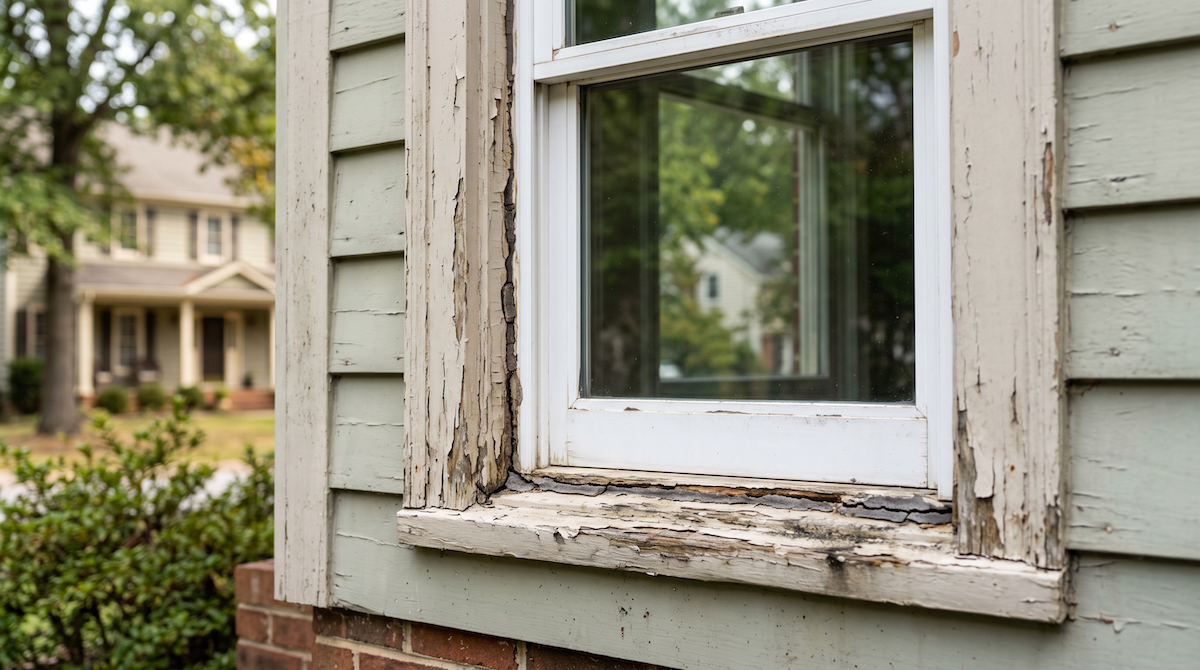

Peeling paint around a window may seem like a minor cosmetic issue.
Sometimes it is.
But persistent peeling can also be a sign that moisture is getting where it shouldn't.
Understanding why the paint is failing can help you determine whether you simply need to repaint or whether a larger problem needs attention.
Moisture Is a Common Cause
Paint does not perform well when moisture repeatedly reaches the material beneath it.
Water can enter around deteriorating seals, damaged trim, failed caulking, or improperly protected exterior surfaces.
As moisture builds up, paint can blister, crack, or peel.
Interior and Exterior Peeling Are Different
Where the paint is peeling matters.
Interior peeling around a window may indicate condensation or moisture from inside the home.
Exterior peeling may be related to weather exposure, failed sealants, or water intrusion.
The location provides an important clue.
Check the Window Seal
Look around the window frame for cracked or deteriorating caulk.
Old sealant can lose its flexibility over time and allow moisture to penetrate vulnerable areas.
Don't Simply Paint Over It
If moisture is causing the problem, applying another layer of paint won't solve the underlying issue.
The damaged area should be evaluated, the moisture source addressed, and the surface properly prepared before repainting.
When Should You Investigate Further?
If peeling paint is accompanied by soft wood, staining, swelling, drafts, or recurring moisture, it deserves more attention.
These symptoms can indicate that the issue extends beyond the paint itself.
If paint around your windows keeps peeling no matter how often you repaint, 1st Home can help determine whether the issue is cosmetic or related to a larger exterior problem.