.svg)

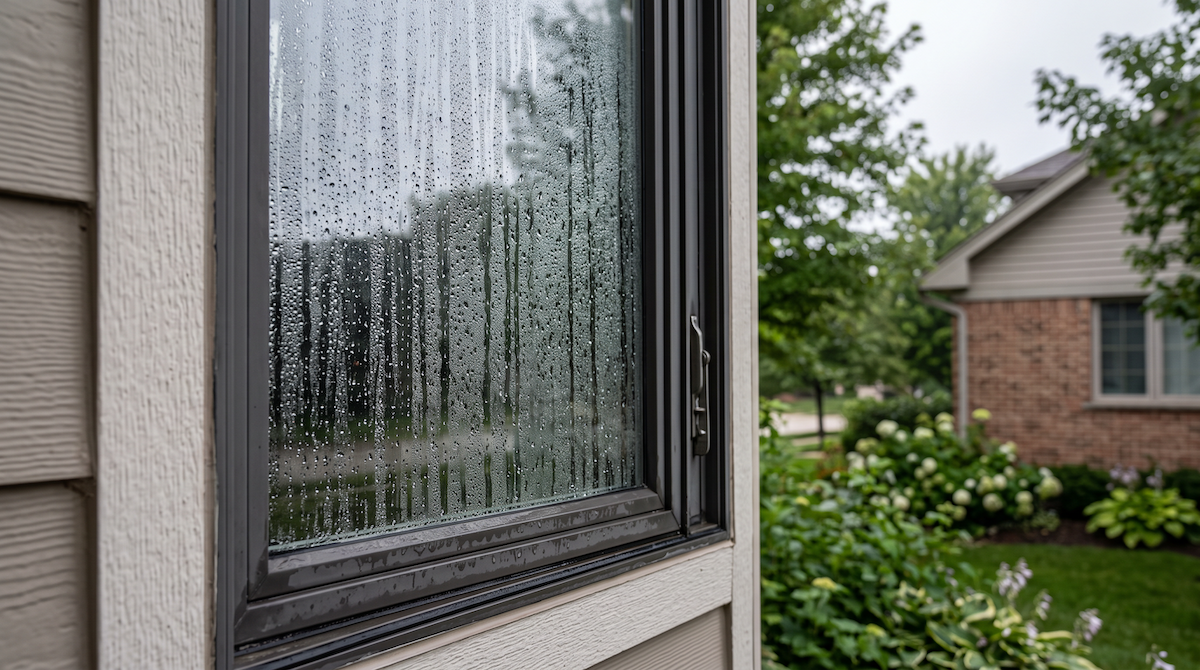

Seeing water droplets on the outside of your windows can be confusing.
Many homeowners immediately assume the windows are leaking or failing.
In reality, exterior window condensation is often completely different from condensation that forms between panes or on the inside of the glass.
Understanding the difference can help you determine whether you're looking at a normal environmental condition or a potential window problem.
Why Does Exterior Condensation Happen?
Condensation forms when warm, humid air comes into contact with a cooler surface.
In certain weather conditions, the exterior surface of a window can become cooler than the surrounding humid air.
Moisture in the air then condenses on the glass.
This can be especially noticeable in the morning when outdoor humidity is high and temperatures change overnight.
Is Exterior Condensation a Bad Sign?
Not necessarily.
In fact, exterior condensation can sometimes occur on energy-efficient windows because the interior glass is doing a better job of preventing indoor heat from reaching the exterior pane.
That means the outside surface can remain cooler.
When Should You Be Concerned?
Exterior condensation itself isn't usually a reason to panic.
However, homeowners should pay attention to where the moisture appears and whether there are other symptoms.
Condensation between window panes can indicate a failed insulating seal.
Water or moisture inside the home around the window can point to a different issue involving drainage, sealing, or installation.
Understanding the Difference
The location of the moisture matters.
Outside the glass can be normal.
Between panes can indicate a seal issue.
Inside the home may require further investigation.
Understanding these differences can prevent homeowners from assuming that every instance of condensation means the windows need replacement.
If you're unsure whether the moisture around your windows is normal, 1st Home can evaluate your windows and help determine whether there is an actual performance or installation issue.