.svg)


Chicagoland Ice Dams: Why They Happen and What Actually Stops Them
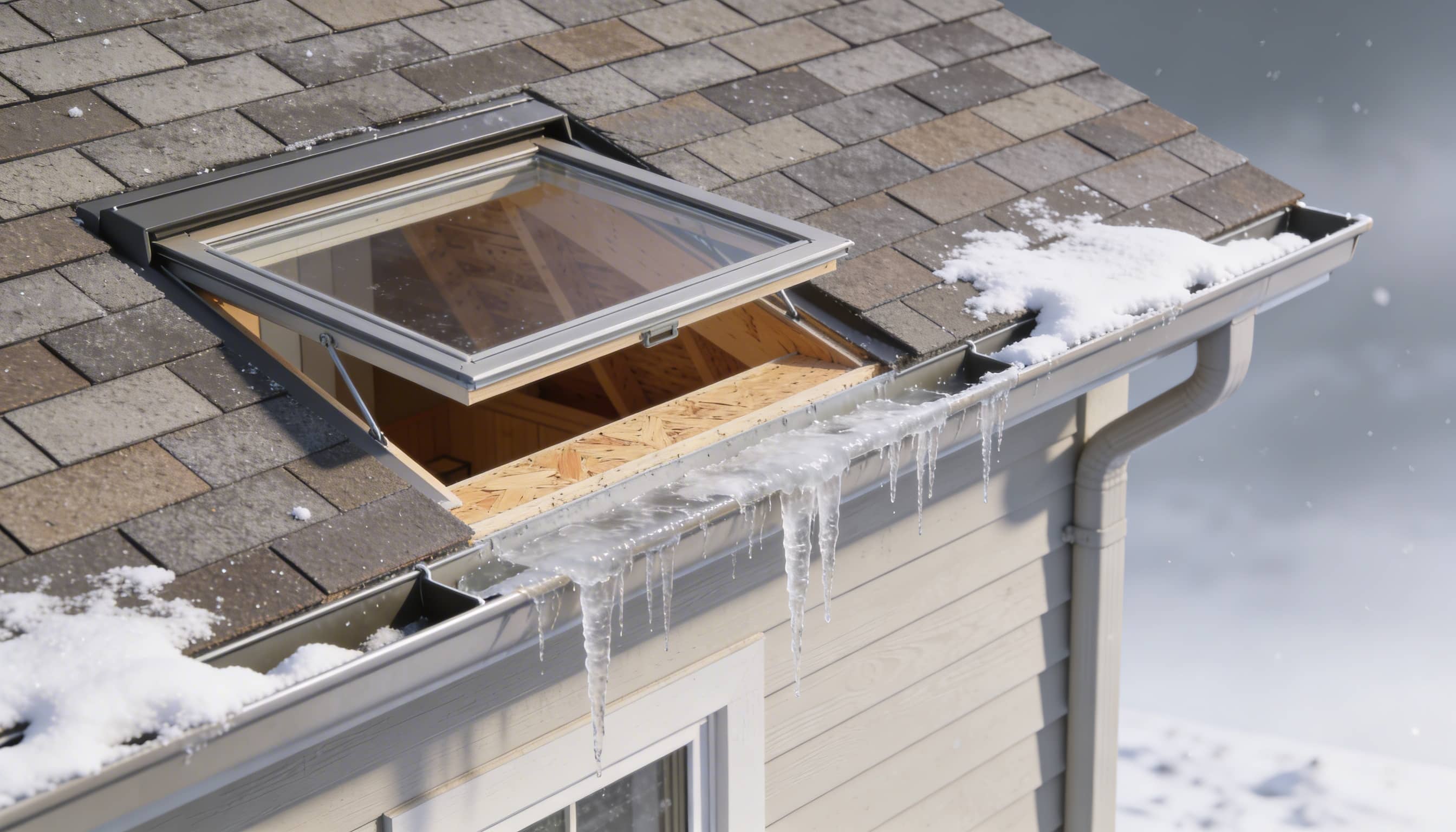
Icicles look harmless until they are not. In Chicagoland, ice dams are a predictable result of heat escaping into the attic, melting roof snow, then refreezing at cold eaves. The real fix is about controlling heat and airflow below the roof deck, not just scraping ice at the edge.
What the roofing industry says prevents ice dams
The National Roofing Contractors Association (NRCA) explains that ice dam membranes at the eaves can help control problems, but they do not prevent ice damming. Their guidance emphasizes that the root causes typically live below the roof deck, and that air sealing the ceiling plane, insulating the attic floor, and providing balanced attic ventilation are key components for effective control. [4]
Why this is a Chicagoland issue
Chicago winters create repeated opportunities for snow-melt and refreeze cycles. When temperatures swing and snow sits on the roof, even small heat leaks can turn into recurring ice buildup at the eaves. [1]
The homeowner checklist that actually matters
If you want to reduce ice dams long-term, focus on the three things that drive them: air leaks, insulation, and ventilation.
1) Find attic bypasses and seal them
Look for gaps where warm air can escape into the attic, including around:
- Recessed lights
- Plumbing and vent pipes
- Attic hatches
- Chimneys and framing transitions
Air sealing matters because escaping warm air carries both heat and moisture. The U.S. Department of Energy notes that reducing air leakage is a cost-effective way to cut heating and cooling costs, and that steps like caulking and weatherstripping often provide quick returns. [45]
2) Verify insulation depth and coverage
Thin insulation or uneven coverage lets heat rise into the attic and warms the underside of the roof. ENERGY STAR provides recommended attic insulation R-values by location and climate zone, which helps homeowners set realistic targets for insulation upgrades in colder regions. [46]
3) Check ventilation balance
Ventilation helps keep attic temperatures closer to outdoor temps and reduces moisture buildup. NRCA notes attic ventilation lowers attic temperatures and helps remove excess moisture, supporting roof durability and reducing ice damming risk. [47]
What not to do
- Do not assume heat cables are the real solution. They can reduce symptoms in a narrow area, but they do not fix the underlying heat loss.
- Do not rely on “more ventilation only” if your attic is leaking warm air. You can vent an attic all day, but if heat is pouring in from below, ice dams can still form.
- Do not ignore chronic moisture. DOE moisture control guidance ties moisture control to comfort, energy efficiency, and mold prevention. [48]
When to call for an inspection
If you have recurring ice dams, visible attic moisture, ceiling stains, or repeated gutter icing, you likely need a whole-attic strategy: air sealing, insulation, and ventilation assessed together. An inspection-based approach helps you understand what is happening before you invest.
The bottom line
Ice dams are one of the clearest signals that your attic is leaking heat. Fix the leak, and the symptom usually fades.