.svg)


Replacing your siding is a significant investment, and one of the most visible decisions you'll make is the color.
Unlike paint, siding isn't something most homeowners want to change every few years.
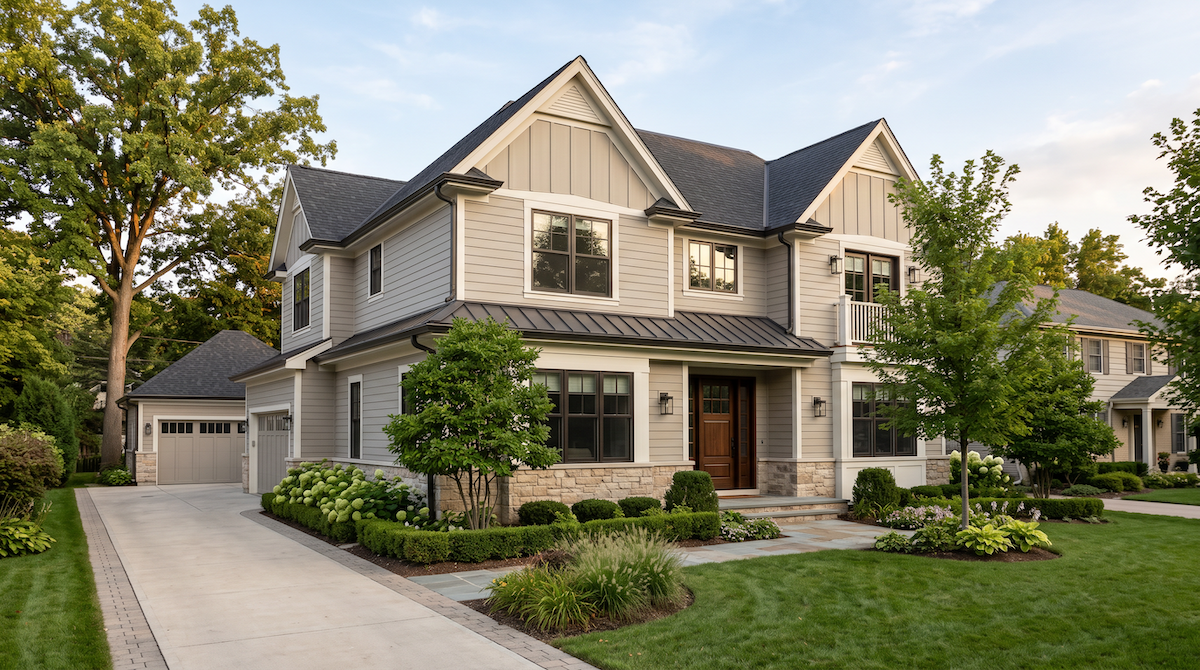
Choosing a color that complements your home's architecture, roof, windows, and surroundings can make a major difference.
Start With the Roof
Your roof is one of the largest visual elements of the home.
If you're keeping your existing roof, your siding should complement its color rather than compete with it.
For example, a darker roof can often work well with lighter or mid-tone siding, while certain lighter roofing materials may provide more flexibility.
Consider Your Windows and Trim
Your windows, doors, soffits, fascia, and trim all contribute to the home's exterior palette.
Think about the entire combination rather than choosing siding color in isolation.
A siding color that looks great in a sample may look very different once paired with your existing trim and roof.
Look at the Neighborhood
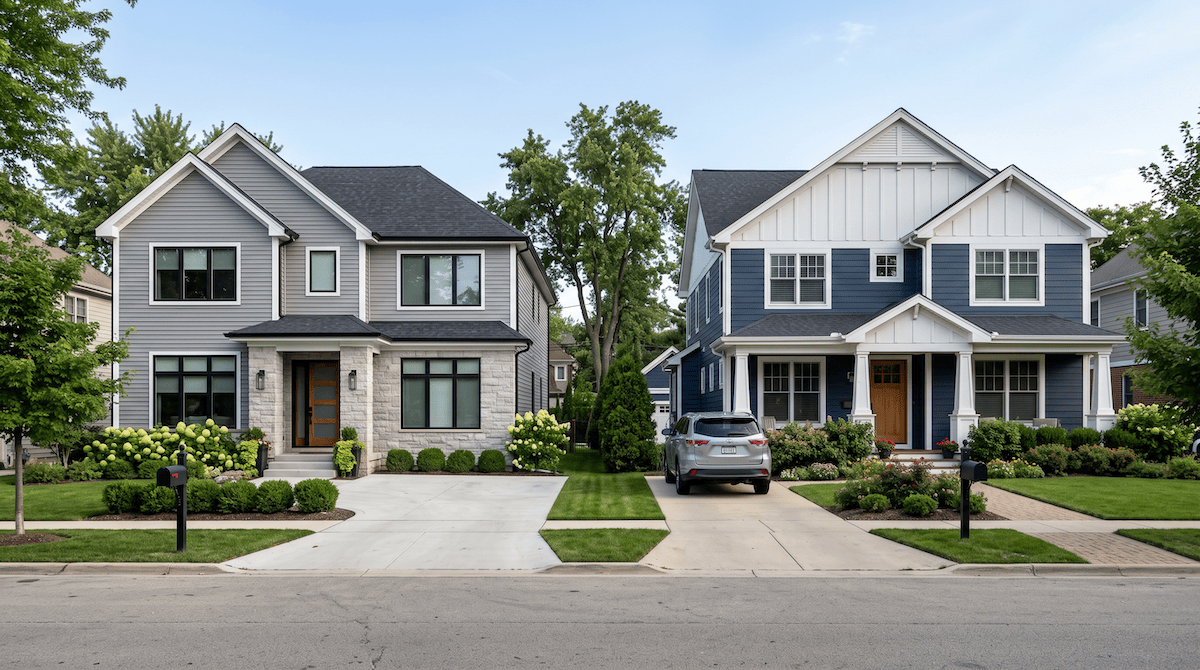
You don't have to copy your neighbors, but the surrounding homes can provide useful context.
A color that looks excellent in one neighborhood may feel out of place in another depending on architecture, landscaping, and overall style.
Think About Long-Term Appeal
Trends change.
Extremely bold exterior colors may look exciting today but could become less appealing later.
If you're making a long-term investment, consider whether you'll still like the color years from now.
Test Before Committing
Whenever possible, look at larger samples in different lighting conditions.
Morning sunlight, afternoon sunlight, and cloudy conditions can all change how siding colors appear.
The goal is to choose something that works with the home, not simply something that looks good on a small sample.
If you're considering new siding and aren't sure which colors or styles will work best with your home, 1st Home can help you explore your options.