.svg)


Chicagoland Door Drafts: The Simple Fix That Can Lower Bills Fast
A drafty front or back door can make an entire room feel colder, and it can also trigger higher heating bills because air leakage is a direct energy loss. The U.S. Department of Energy (DOE) notes exterior doors can contribute significantly to air leakage and waste energy through conduction, especially if they are old, uninsulated, improperly installed, or improperly air sealed. [52]
Start with a simple draft diagnosis
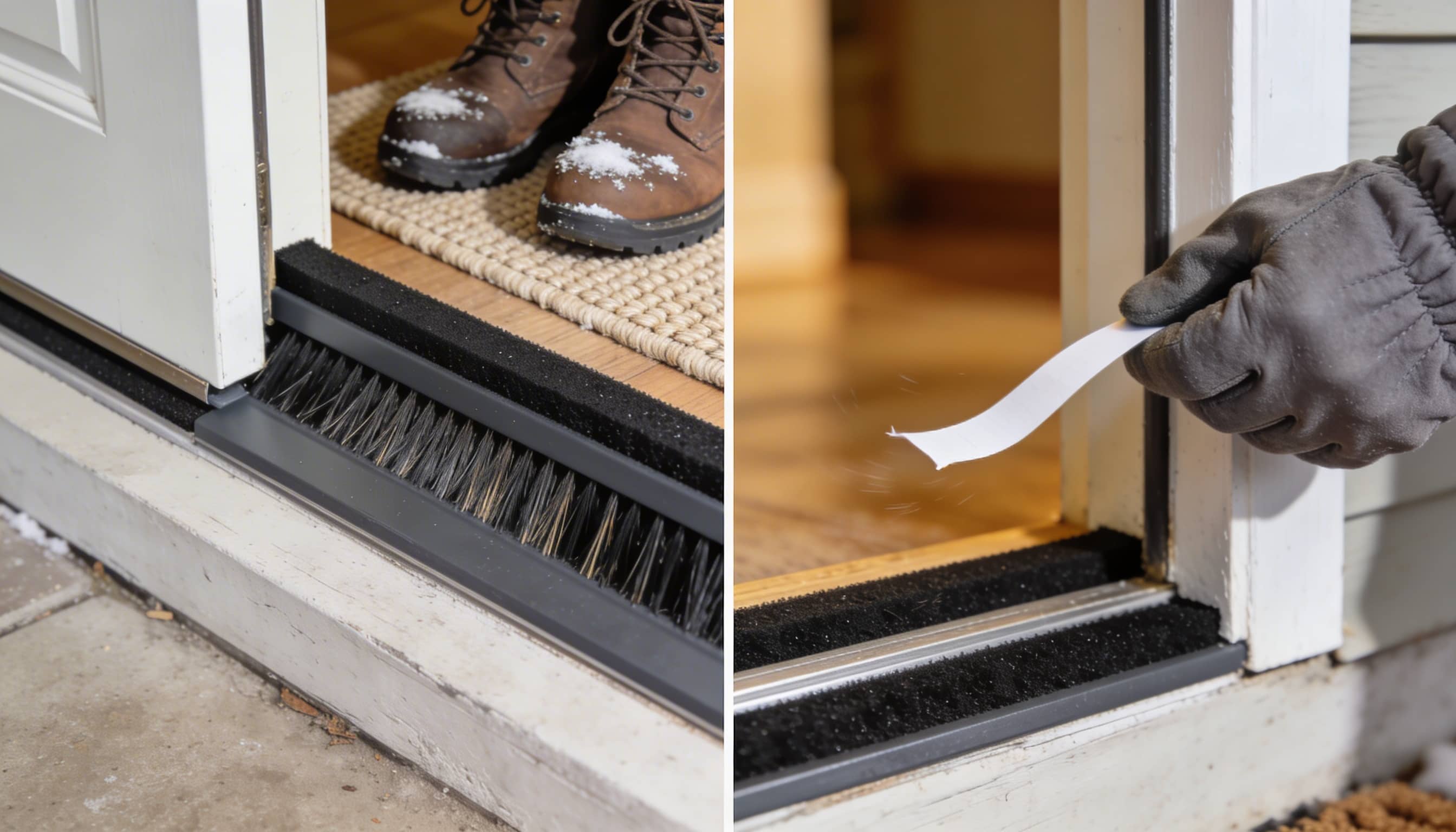
Before you replace anything, find out where the draft is coming from.
On a cold or windy day:
- Feel around the door edges with your hand
- Look for daylight at the threshold
- Notice whether the draft is on the bottom, latch side, or hinge side
Each location points to a different fix. A bottom draft is often a sweep or threshold issue. A latch-side draft may be weatherstripping or alignment. A hinge-side draft can signal a shifted frame or worn seals.
Weatherstripping is the first line fix
For many doors, weatherstripping is the fastest and most cost-effective improvement.
DOE explains that weatherstripping reduces energy losses due to air leakage and recommends sealing the entire jamb, using the correct door sweeps and thresholds, and making sure corners meet tightly. [53]
If weatherstripping is missing, flattened, or cracked, it is rarely doing much anymore.
Air sealing value goes beyond comfort
Stopping a draft is not only about feeling warmer. It is also about making your home more stable and efficient.
DOE notes that caulking and weatherstripping are effective air sealing techniques with quick returns, while also improving comfort and durability. [54]
In older Chicagoland homes, tightening up the entry points can be one of the most noticeable “small” upgrades.
When repair is not enough
Sometimes the door itself is the problem.
Some doors are warped or swollen from moisture. Others are structurally failing, uninsulated, or have glass that performs poorly in cold climates. DOE notes insulated steel and fiberglass doors tend to be more energy efficient than wood, and that new exterior doors often fit and insulate better than older types. [52]
If you have repeated drafts even after weatherstripping and alignment work, replacement may be the durable fix.
What to ask when replacing a door
A door’s performance depends heavily on installation. When getting quotes, ask:
- How will the installer seal the frame to the rough opening?
- How will the threshold be set to prevent air and water intrusion?
- How will water management be handled at the sill?
In Chicagoland, wind-driven rain and freeze-thaw cycles punish sloppy details.
ENERGY STAR also certifies doors by climate zone performance, so if you are already replacing, you can align the door choice with climate requirements and expectations. [55]
What homeowners usually notice after fixing door drafts
Most homeowners notice changes immediately:
- Less “cold wash” near the entry
- Fewer whistling sounds on windy days
- More stable room temperature
Many also notice improved indoor humidity control because uncontrolled infiltration and exfiltration affects moisture movement patterns. [56]
Chicagoland takeaway
Doors are one of the simplest envelope wins, especially in older Chicagoland homes with seasonal movement.