.svg)


Chicagoland Basements: The Smart Way to Handle Moisture and Radon
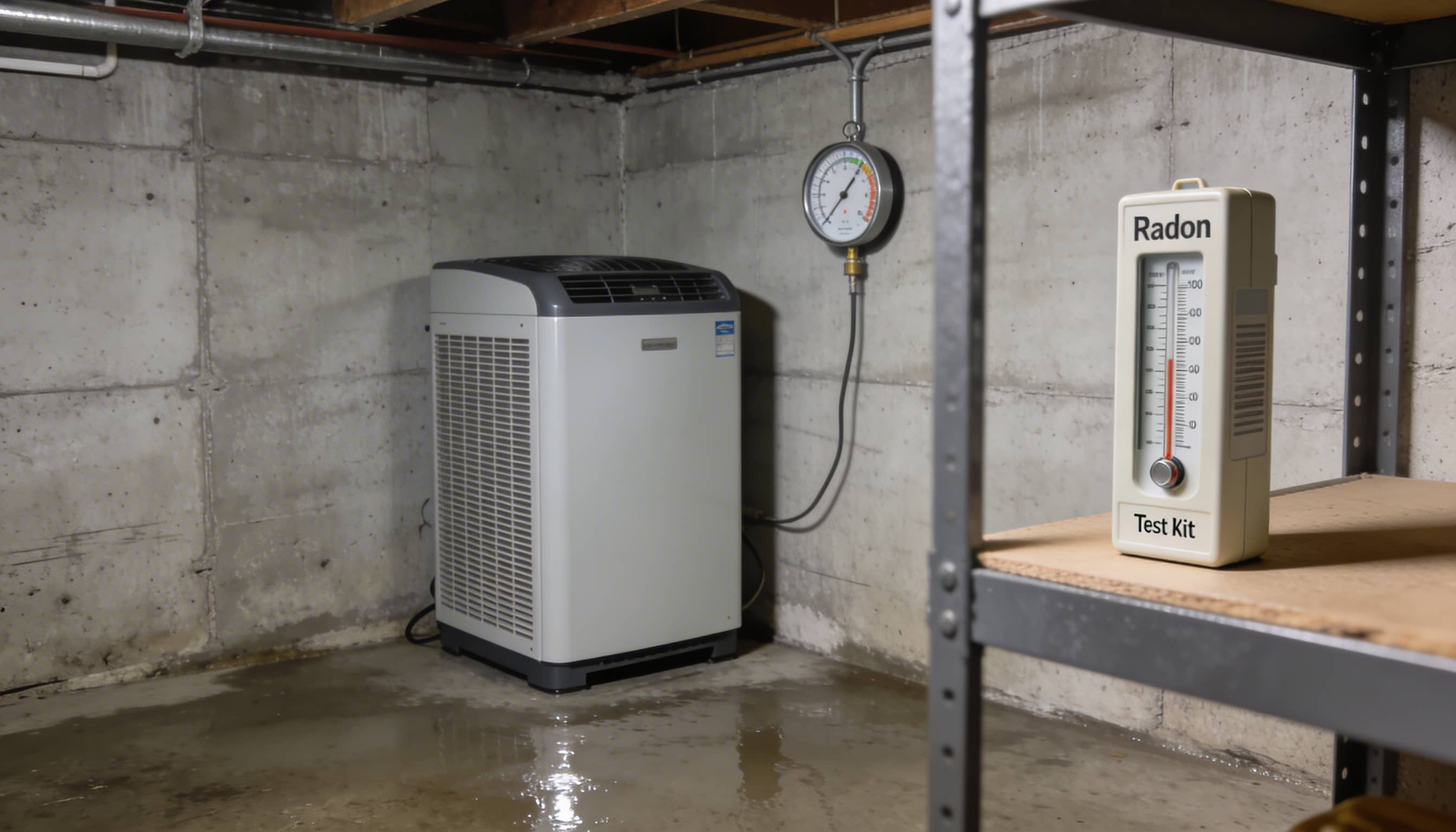
Basements in Chicagoland are where two invisible problems often converge: moisture and radon. Both matter for health and durability, and both benefit from a “test then fix” approach instead of guessing.
Start with radon testing, regardless of neighborhood
Radon is not a “bad neighborhood” problem. It is a geology and airflow problem, which is why testing is the only way to know your risk.
EPA’s Illinois radon guidance emphasizes that all homes should be tested. It identifies the action level at 4 pCi/L, with consideration for fixing when levels fall between 2 and 4 pCi/L. [5]
Moisture is the other half of the basement picture
Even if your basement looks “dry,” moisture can still be affecting comfort, air quality, and long-term durability.
DOE notes that controlling moisture can make a home more energy efficient and comfortable and help prevent mold growth. EPA mold guidance also emphasizes moisture control as the core strategy for preventing mold problems. [48]
Signs your basement is not managing moisture well
Moisture problems often show up as patterns you get used to over time. Watch for:
- Persistent musty odor
- Visible condensation on pipes or walls
- Peeling paint or bubbling wall finishes
- Efflorescence (white mineral deposits on masonry)
- Damp carpet edges or warped baseboards
- A dehumidifier that fills constantly
Moisture issues typically come from bulk water entry, poor drainage, or humid air meeting cool surfaces.
Drainage and downspouts are part of basement health
Basement moisture is often an outside problem showing up inside.
FEMA homeowner guidance highlights keeping gutters and downspouts clear and directing water away from the foundation as part of flood and moisture risk reduction. [57]
If downspouts dump water next to the foundation or grading slopes toward the house, your basement is doing extra work all year.
Why radon and moisture are linked in real homes
In many homes, moisture and radon share the same entry routes.
Foundation cracks, gaps around penetrations, and sump areas can influence both moisture intrusion and soil gas movement. That overlap is one reason a whole-system inspection often works better than piecemeal fixes.
What a practical basement plan looks like
A good basement strategy follows a clear sequence:
Step 1: Test radon
Step 2: Identify moisture sources, including drainage and grading
Step 3: Confirm ventilation and dehumidification are appropriate for the space
Step 4: If radon is elevated, install mitigation per standards
Step 5: Improve exterior water management so mitigation and dehumidifiers are not fighting constant new moisture loads
Why it is worth acting
Better moisture control protects framing, finishes, and indoor air quality. Radon mitigation reduces a serious inhalation risk. The most expensive version of basement work is the version you do after mold and rot are established.
Chicagoland takeaway
Basement issues are rarely solved by one product. They are solved by diagnosis, testing, and a sequence of fixes.